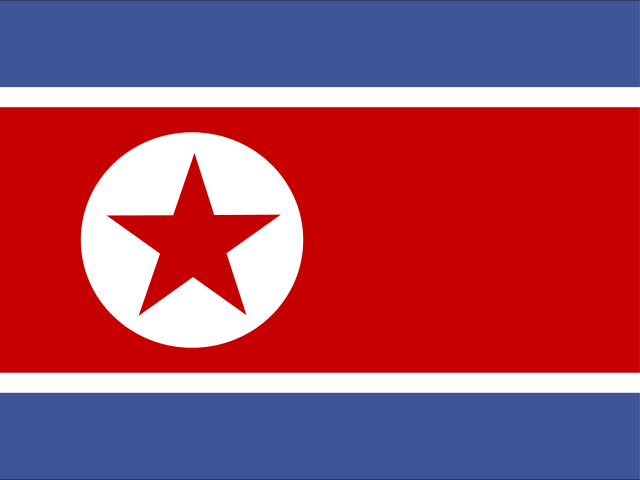
This article covers trade between India and the Democratic People's Republic of Korea (DPRK), the effect of United Nations sanctions on that trade, India's ITEC training offer, the science agreements, and the humanitarian assistance the two countries have given each other. It is based on the Ministry of External Affairs (MEA) bilateral brief dated 12 February 2025, and trade figures are given for the years the brief states.
Trade and UN sanctions
According to the MEA brief of February 2025, bilateral trade between India and the DPRK declined in the recent past, mainly because of the DPRK's inability to carry on foreign trade due to a financial crunch. Adhering to UN Security Council sanctions resolutions, India has banned all trade with the DPRK, except food and medicine, with effect from April 2017.
The brief also refers to a controversy over reported violation of the UN Security Council sanctions on North Korea during 2017, through the import of metals worth US$ 2.2 million and the export of jewellery valued at more than $ 5,78,000.
Trade figures
The brief gives the following trade figures, in US$ million, citing the Ministry of Commerce as the source:
- 2012-2013: exports 202.78, imports 259.39, total trade 462.16
- 2013-2014: exports 186.80, imports 12.48, total trade 199.29
- 2014-2015: exports 76.52, imports 131.93, total trade 208.45
- 2015-2016: exports 110.88, imports 87.90, total trade 198.78
- 2016-2017: exports 44.84, imports 88.59, total trade 133.43
- 2017-2018 (April to February): exports 55.39, imports 25.46, total trade 80.85
The brief states that no data is available after 2018, and although its heading for this section refers to investment, it gives no investment figures.
ITEC training
India has offered training slots to the DPRK under the Indian Technical and Economic Cooperation (ITEC) programme since 2002-2003. The programme enables DPRK officials and professionals to take part in short-term training courses in fields including:
- Government functions: public administration, good governance and government accounting
- Environment and climate change: environmental management, climate change mitigation and sustainable development
- Agriculture: agricultural research, extension management and rural development
The brief notes that the use of allocated slots has been relatively low compared with other partner countries. Both India and the DPRK are keen to explore ways to fully use the slots allocated by the Government of India in future.
Science and technology agreements
Two agreements cover cooperation in science. The Agreement between DPRK and India on Cooperation in the field of Science & Technology was signed on 8 May 1991 and was initially valid for 5 years unless either party decided to terminate it. A Protocol was to be signed later to implement the Agreement, but the brief states that this has not been done so far.
An Agreement on Scientific Cooperation was signed between the State Academy of the DPRK and the Indian National Science Academy on June 14, 1994. It is valid for an initial period of two years.
Humanitarian assistance from India
The brief states that India has extended humanitarian assistance to the DPRK, which has suffered food shortages during the last few years as a result of natural calamities. It adds that the DPRK authorities have expressed their gratitude for this assistance from time to time.
The assistance has included consignments of blankets, rice, wheat, baby food and polythene sheets. Specific contributions recorded in the brief are:
- 2,000 MT of white rice in September 2002
- 1000 MT of rice in July 2004
- 200,000 Dexamethasone 4 mg. (1 ml injection)
- Medicines for the victims of the Ryongchon train blast
- 2,000 MT of rice in January 2006, as a gift of the Government and people of India
- Food assistance worth US$ 1.00 million through WFP in 2011
- Food assistance in the form of soybeans worth US $ 1 million through WFP in 2016
Assistance from the DPRK
The DPRK Government donated US$ 30,000 to the Prime Minister's National Relief Fund for the relief of the people affected by the Tsunami that hit India in December 2004.