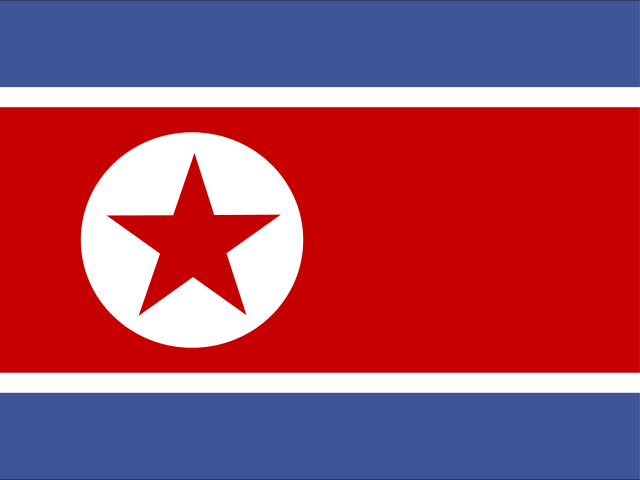
This article covers cultural relations between India and the Democratic People's Republic of Korea (DPRK): the cultural agreement and exchange programmes, India's participation in the Pyongyang International Film Festival, the Korea-India Friendship Association and the support India has given it, and the position of Indian nationals in the country. It is based on the Ministry of External Affairs (MEA) bilateral brief dated 12 February 2025.
Cultural agreement and exchange programmes
According to the MEA brief of February 2025, the first Cultural Agreement between India and the DPRK was signed in 1976. The 11th Cultural Exchange Programme, for 2010-12, was signed during the visit of the Secretary, Ministry of Culture, from 23-25 March 2010.
The Cultural Exchange Programme (CEP) between the two governments for 2017-2020 is described in the brief as being in the final draft stage.
Cultural troupes
Under the 1976 Cultural Agreement, ICCR used to send cultural troupes every year to the April Spring Friendship Art Festival in Pyongyang. A Bhangra/Giddha dance troupe took part in the 2004 Spring Festival to mark the 30th anniversary of the establishment of diplomatic relations.
The brief notes, however, that no cultural troupe from India has visited the DPRK for the last several years. After the re-opening of the Indian Embassy, the Government of the DPRK is keen to send a cultural delegation to India and has also expressed a wish to receive one from India.
Pyongyang International Film Festival
India has been a regular participant in the biennial Pyongyang International Film Festival (PIFF). The brief states that Indian feature films are highly admired by the Korean public and authorities, and India's recorded results at the festival include:
- The Bengali film "Ek Nadir Galpo" (Tale of a River) won the music award at the 11th PIFF.
- The feature film "For Real" received a special prize at the 12th PIFF in 2010.
- In 2012 India took part in the 13th PIFF with ten films, including "Urumi" (Malayalam) and "Balgandharva" (Marathi).
- At the 14th PIFF in 2014, "Ram Leela" and "Singh Sahab the Great" won awards for best technology and special awards respectively.
- In 2016, at the 15th PIFF, "Masaan" won the best music award and "Ram Singh Charlie" the best screenplay award.
The brief also states that Indian films are extremely popular in the DPRK, with no restrictions on their screening, and describes them as a staple in every household.
Korea-India Friendship Association
The Korea-India Friendship Association (KIFA) was established in February 1970 by the Committee for Cultural Relations with Foreign Countries (CCRFC), to promote friendly relations and to project India's cultural image in the DPRK. The Association is the nodal point for interaction between the Indian Embassy and the CCRFC, which is the counterpart of ICCR. It organises events from time to time and runs a Friendship School, a Farm and a Shoe Factory.
India has supported the Association in several ways, as recorded in the brief:
- 100 Kg of wheat seed donated in March 2006
- Computers and audio visual equipment donated to the India-DPRK Friendship School in August 2006
- A Grant-in-Aid of Rs.50,000 from the Department of Culture, sanctioned up to 2009-10
- A cheque of Euro 2000 in 2010-11, under the sanction of the Ministry of Culture
- A Grant-in-Aid of Rs. 5 lakh in 2013-14, given in the form of computers, printers and fertilizer
- A Grant-in-Aid of Rs. 5 lakh for 2014-2015, given to KIFA units as a power tiller, computers and LED TVs
- Grants-in-Aid of Rs. 5 lakh for 2015-16, and for 2016-2017 and 2017-18, distributed to KIFA units, the later ones in the form of fertilizers, TV and projectors
- Musical instruments donated by ICCR to the KIFA-run school
The brief adds that, according to new regulations in the DPRK, no associations are allowed to establish connections or collaborations with any foreign country.
Indian community
The brief records that no Indian is living in the DPRK.