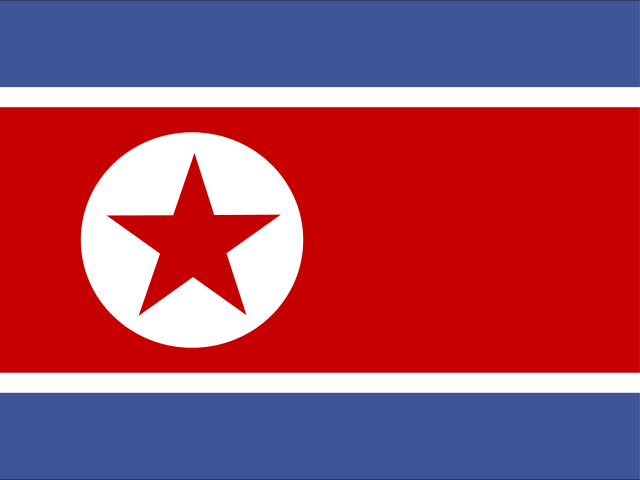
This article covers the political relationship between India and the Democratic People's Republic of Korea (DPRK): the establishment of diplomatic ties, India's stated positions on the Korean Peninsula, the Foreign Office Consultations, the bilateral agreements in force or signed, and the visits exchanged between the two countries. It is based on the Ministry of External Affairs (MEA) bilateral brief dated from Pyongyang on 12 February 2025.
Diplomatic ties and shared positions
According to the MEA brief of February 2025, diplomatic ties between India and the DPRK were established in 1973. The brief describes the relationship as characterised by "friendship, cooperation, and understanding".
As members of the Non-Aligned Movement, the two countries share common views on various international issues, such as disarmament and South-South Cooperation. The brief states that they continue to collaborate in international forums and support each other on bilateral and international issues, and that they cooperate in the United Nations and other international organisations.
India's position on the Korean Peninsula
India welcomed the North-South Joint Declaration of June 15, 2000. The brief states that India favours reducing tension on the Korean Peninsula and reunifying the two Koreas through peaceful means and direct dialogue.
At the same time, the brief records that India strongly condemned the DPRK's nuclear tests and frequent ballistic missile tests, urging restraint to ease tensions on the Korean Peninsula.
Foreign Office Consultations
Regular exchanges of views on bilateral issues take place through Foreign Office Consultations (FOC). Earlier rounds were held in June 2005 and in September 2011, when delegations led by the Secretary (East) visited Pyongyang for the FOC.
The first Joint Secretary-Director General level talks took place in Pyongyang in April 2013. After a five-year gap, the FOC resumed in New Delhi on April 26, 2016, with the Vice Minister of Foreign Affairs of DPR Korea attending. As of the brief, India is looking forward to the next FOC.
Bilateral agreements
The brief lists the following political, cultural and information agreements and their status:
- Protocol on Cooperation between the Ministry of External Affairs of India and the Ministry of Foreign Affairs of DPRK, signed on 17 February 1998. It was initially valid for five years, to be automatically extended for a further five years unless either party decided to terminate it.
- The first Cultural Agreement between India and DPRK, signed in 1976.
- Agreement on Cooperation in the field of Information, signed in April 2006. Under Article IX of this Agreement a Joint Committee was to be set up to review its progress. The Indian side formed a Committee in November 2006, but the first meeting, which was to be held in Pyongyang, has been postponed.
Visits from India to the DPRK
The brief lists these visits from India:
- Dr. Shanker Dayal Sharma, Vice President, in April 1992, at the invitation of the DPRK Vice President, who had visited India in May 1991
- Shri H.S. Surjeet, General Secretary of CPI (M), in April 1993, at the invitation of the Central Committee of the Workers' Party of Korea
- Shri Jyoti Basu, Chief Minister of West Bengal, in May 1994, also at the invitation of the Central Committee of the Workers' Party of Korea
- Shri P. Shiv Shanker, Governor of Sikkim, in August 1995, for the Liberation Day of Korea
- Shri Mukhtar Abbas Naqvi, MOS for I&B, in September 1998, for the 6th Pyongyang Film Festival
- Shri Rajiv Sikri, Secretary (East), and Shri Ashok K. Kantha, Joint Secretary (EA), in June 2005 for the FOC
- Shri N. Ravi, Secretary (East), in May 2008
- Shri Jawhar Sircar, Secretary, Ministry of Culture, in March 2010
- Shri Sanjay Singh, Secretary (East), and Shri Sandeep Chakravorty, Director (EA), in September 2011 for the FOC
- Prof. Sandip K. Mishra, Department of East Asian Studies, University of Delhi, during 3-13 March 2013, for research at various universities and meetings with scholars from Pyongyang University
- Shri Gautam H. Bambawale, JS (EA), and Shri Vijai Kumar, DS (EA), for the 1st JS-DG level talks in April 2013
- A three-member delegation of MPs, Sh. Sitaram V. Yechuri (RS), Sh. Tarun Vijay (RS) and Muhammed Hamdullah Sayeed (LS), with Sh. Vijai Kumar, DS (EA), for the 60th Anniversary of the Victory in the Fatherland Liberation War during 26-29 July 2013
Visits from the DPRK to India
High-level visits from the DPRK listed in the brief are:
- Mr. Li Gun Mo, Prime Minister, on a goodwill visit in February 1988
- Mr. Li Jong Ok, Vice President of DPRK, in May 1991 and March 1993
- Mr. Yang Hyong Sop, Chairman, Supreme People's Assembly, in April 1998
- Mr. Choe Thae Bok, described as Chairman of SPA as Secretary of Central Committee of the Workers' Party of Korea, in October 1998
- Mr. Pak Gil Yon, Vice Foreign Minister, in April 2000
- Mr. Jang Chol, Vice-Chairman of Supreme People's Assembly, in January 2003
- Mr. Choe Chang Sik, Vice Minister of Public Health, in November 2005 for the 3rd GAVI Partners' Meeting in New Delhi
- Mr. Ma Chol Su, Director of 4th Department in the DPRK Ministry of Foreign Affairs, in March 2006, to discuss bilateral matters with JS (EA)
- Mr. Ri Ju Kwan, Vice-Chairman of the DPRK Information Committee, in April 2006, to sign the Agreement on Cooperation in the field of Information
- Mr Kim Yong Il, Vice Foreign Minister, in May 2007 and August 2009
- Mr. Ri Su Yong, Foreign Minister of DPR Korea, on a bilateral and stand-alone visit on 12-14 April 2015, which the brief calls the first ever Ministerial-level visit from DPR Korea in nearly three decades
- Mr. Ri Gil Song, Vice Minister of Foreign Affairs, for the Foreign Office Consultation in April 2016
- Mr. Kang Il Sop, Chairman of the State Commission for Emergency & Disaster Management of DPRK, for the Asian Ministerial Conference on Disaster Risk Reduction from 2-5 November 2016