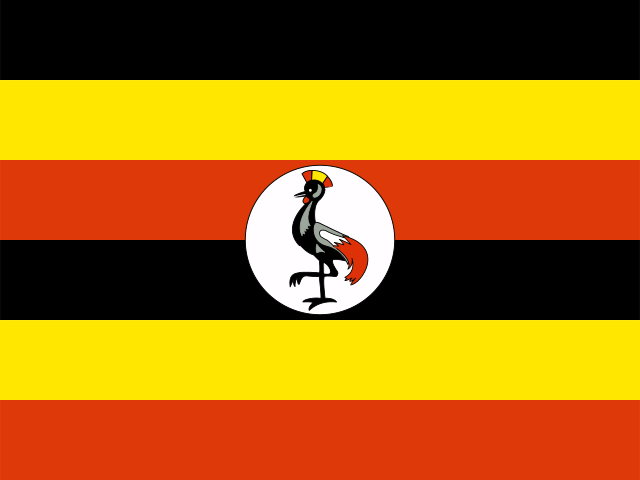
This article covers cultural relations between India and Uganda, education and scholarships for Ugandans, and the Indian community in Uganda, including its history, its role in the economy and its associations. It is based on the MEA bilateral brief of April 2026, and community figures are the estimates given in that brief.
Cultural links
A Cultural Exchange programme was among the MoUs and Agreements signed during the Prime Minister's visit to Uganda in July 2018.
According to the MEA brief of April 2026, "India Day" is an annual feature that showcases Indian culture and attracts thousands of visitors. The brief states that the event brings together the Indian and Ugandan communities. The Indian Association organises cultural performances on this occasion, to which popular artists from India are invited.
Education
The brief states that India is seen as a destination for quality and affordable education by Ugandans. The Government of India offers scholarships and fellowships to Ugandans from the government and the private sector to pursue undergraduate, postgraduate and research courses in India. Training courses in highly specialised areas are also conducted.
Over the years, hundreds of Ugandans have studied in Indian colleges and universities, including many Ugandan Ministers and high-ranking Government officials. The brief notes that an APTECH franchise and ISBAT University in Kampala have brought Indian education even closer to Ugandans.
Scholarships
Every year, 32 Ugandan nationals are selected for full-time scholarships under the Indian Council for Cultural Relations (ICCR) for undergraduate, postgraduate and doctoral studies at various Indian universities.
National Forensic Science University campus in Jinja
On 28th August 2022, NFSU, Gandhinagar, and the Ministry of Defence of Uganda signed an MoU to open NFSU's foreign campus in Uganda. The Government of Uganda earmarked 130 acres of land at Jinja for the permanent campus of the National Forensic Science University (NFSU), which was inaugurated by the External Affairs Minister on 12 April 2023.
The University started operations in March 2024. On 2nd October 2025 it began its inaugural Academic Session (2025-26) with 4 programmes, two Master's degrees and two P.G. Diplomas, in Forensic Sciences, Homeland Security and Cyber Security & Digital Forensics.
Schools and innovation
Uganda's Minister of State for Primary Education, with the Permanent Secretary of the Ministry of Education, took part in the UNESCO-India-Africa (UIA) Hackathon held in Greater Noida on 25 November 2022. The Minister attended the prize distribution ceremony as a special guest on behalf of the First Lady and the Minister of Education.
History of the Indian community
Indians first came to Uganda at the beginning of the 20th century. The brief records that during the reign of President Amin in the early 70's, around 60,000 Indians and PIOs were expelled.
After coming to power in 1986, President General Yoweri Kaguta Museveni invited them back. The brief states that several progressive steps, such as restoring properties seized from PIOs, encouraged many of those Indians to return and make a fresh start.
The Indian community today
As of the brief, there are approximately 35,000 Indians and PIOs living in Uganda, the majority of whom are Indian passport holders. The community is mainly concentrated in Kampala and in the town of Jinja. The brief describes the Indian community as presenting "the strongest and most durable economic and cultural links with Uganda".
According to the brief, Indians and PIOs play a leading role in the Ugandan economy, especially in manufacturing, trade, agro-processing, banking, sugar, real estate, hotels, tourism and information technology. They employ thousands of Ugandans and are amongst the biggest taxpayers in the country. The brief states that Indian nationals and PIOs constitute less than 0.1% of Uganda's population but contribute a major part of Uganda's direct taxes.
Community associations
The "Indian Association" and the Indian Women Association are two pan-Indian associations representing different states and the Indian diaspora. There are also more than fifty other community associations representing different states and communities. The brief states that the High Commission of India works closely with all these associations.
Philanthropy
The brief states that the Indian community engages in philanthropic activities, and that individuals and companies of PIOs regularly perform their share of social responsibility. A share of the proceeds from community events is donated to social causes in Uganda, including assistance to the homeless and organising blood donation camps.