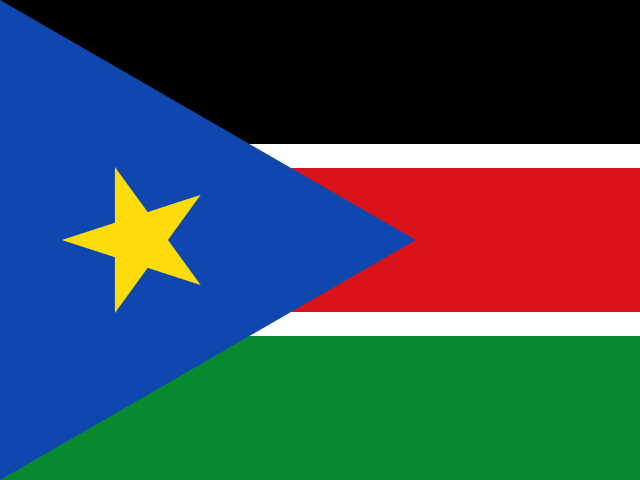
This article covers the political relationship between India and South Sudan: the background to South Sudan's independence and India's recognition of it, high-level and ministerial visits, the dialogue mechanisms between the two governments, participation in India-led initiatives, and the contribution of Indian peacekeepers to UN missions in the country. It is based on the Ministry of External Affairs (MEA) bilateral brief of April 2026.
Background to independence
According to the MEA brief of April 2026, South Sudan was part of Anglo-Egyptian administered Sudan from 1899 to 1955 under joint British-Egyptian rule. After two civil wars (1955-72 and 1983-2005), it became an autonomous region, the "Southern Sudan" State, within Sudan. The brief states that India's position remained neutral in the long-running civil wars for autonomy of Southern Sudan.
In 2005, a Comprehensive Peace Agreement (CPA) was signed in Nairobi between the Government of Sudan and the Sudan People's Liberation Movement (SPLM). The then Indian Minister of State for External Affairs, Shri E. Ahmed, attended the signing ceremony. The agreement led to autonomy for the southern part, with a provision for a referendum on independence in six years' time.
Independence and recognition
Following a referendum held in January 2011, South Sudan gained independence from Sudan on 9 July 2011. The brief records that India was one of the first countries to recognise independent South Sudan, and that the then Vice President Shri Hamid Ansari attended the Independence Day celebrations in Juba on 9 July 2011. The brief describes the two countries as having "always enjoyed cordial and friendly relations".
Political transition
A civil war started in December 2013. The Revitalized Agreement on the Resolution of the Conflict in the Republic of South Sudan (R-ARCSS) was signed among the warring rivals in Addis Ababa on 12 September 2018. A transitional government of national unity, a coalition of signatory political partners based on the power sharing formula in the agreement, has been in place since February 2020. As of the brief, its main mandate is to implement the R-ARCSS and hold elections in December 2026, for a democratic transfer of power by February 2027.
High-level and ministerial visits
The then Prime Minister Dr. Manmohan Singh met South Sudanese President H.E. Salva Kiir Mayardit in New York in September 2011, on the sidelines of the UN General Assembly. President Salva Kiir led a high-level delegation to the 3rd India Africa Forum Summit (IAFS-III) in New Delhi in October 2015 and held a bilateral meeting with PM Mr Narendra Modi on 30 October 2015.
Gen. (Rtd) V. K. Singh, Minister of State, visited Juba in July 2015 as the then Special Envoy of the Prime Minister to deliver invitations for the 3rd India Africa Forum Summit to President Salva Kiir and Foreign Minister Dr. Barnaba Marial Benjamin. Shri V. Muraleedharan, Minister of State for External Affairs and Parliamentary Affairs, visited Juba during 20-22 October 2021 for bilateral talks.
Parliamentary and ministerial visits from South Sudan recorded in the brief include:
- April 2023: the Speaker of the Transitional National Legislative Assembly, Jemma Nunu Kumba, led an 18-member delegation to New Delhi, including Parliamentary Affairs Minister Mary Nawai Martin.
- October 2024: Hon. Dr. Jacob Maiju Korok, Deputy Minister of ICT & Postal Service, led the South Sudanese delegation to the World Telecommunication Standardization Assembly (WTSA) in New Delhi during 14-24 October 2024.
- February 2025: Lt. Gen. Chol Thon J Balok, the Minister of Defence and Veterans Affairs, attended Aero India at Bengaluru.
Dialogue mechanisms
An MoU on Foreign Office Consultations (FOC) was signed in New Delhi on 22 February 2019. The first Foreign Office Consultations took place in Juba from 2-4 December 2025, with the Indian delegation led by Dr Suresh Kumar M, JS (WANA).
Besides the Director General level consultations, the Indian delegation called on H.E. James Wani Igga, Vice President and Chair of the Economic Cluster; Hon. Ambassador Monday Semaya K. Kumba, Minister of Foreign Affairs and International Cooperation; Hon. Martin Abucha, Minister of Mining; Hon. Onyoti Adigo Nyikec, Minister of Livestock & Fisheries; and Hon Amb Akuei Bona Malwal, Deputy Minister of Foreign Affairs and International Cooperation. The brief states that the next meeting will be in India.
The South Sudan Government signed the Framework Agreement on the International Big Cat Alliance (IBCA) in December 2025.
Indian peacekeepers in UNMISS
The United Nations Mission in South Sudan (UNMISS) was established by a UN Security Council resolution in 2011. As of the brief, India has provided a contingent of over 2,300 defence personnel out of a total strength of around 17,000. Lt Gen Mohan Subramanian of the Indian Army was the Force Commander of UNMISS from August 2022 to March 2026, and his predecessor, Lt. Gen. S.S. Tinaikar, was also an Indian Army officer.
Indian peacekeepers are deployed in the Juba, Bore (Jonglei State) and Malakal (Upper Nile State) regions. In addition, a police component (UNPOL) of 26 Indian Police Officers is attached to UNMISS. Beyond peacekeeping operations, the brief notes that Indian peacekeepers train youth in fields including the repair of computers and diesel gen-sets, and conduct veterinary camps to help local communities care for their large cattle population in Bor and Malakal.
In 2013, seven soldiers of the Indian peacekeeping battalion made the supreme sacrifice in the cause of peace in two different attacks in Jonglei State: Lt. Col. Mahipal Singh Pilania, Warrant Officer Dharmesh Sangwan, Warrant Officer Kumar Pal Singh, Naib Subedar Shiv Kumar Pal, Havildar Heera Lal, Havildar Bharat Sasmal and Lance Naik Nandkishor Joshi. The brief states that the bravery and social welfare activities of the Indian peacekeepers are highly commended by both the local population and the Government of South Sudan.
Indian peacekeepers in UNISFA
The United Nations Interim Security Force for Abyei (UNISFA) is a UN peacekeeping force in Abyei, an oil rich border area contested between Sudan and South Sudan and, as of the brief, administered jointly by the two countries. UNISFA was established through a UN Security Council resolution in 2011, which provided for the deployment of 4,200 Ethiopian troops. From January 2022 it became a multinational force of 3,250 military personnel, 640 police personnel and civilian support. An Indian contingent of around 570 soldiers is deployed in UNISFA.