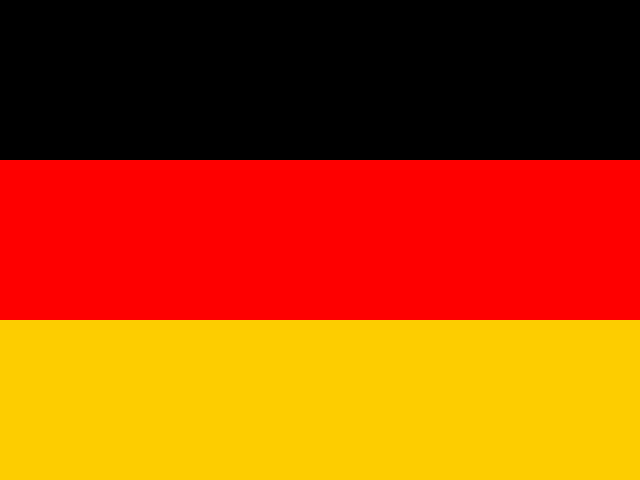
This article outlines diplomatic relations between India and Germany: the establishment of ties, the Strategic Partnership, the Intergovernmental Consultations, high-level visits, and the main dialogue mechanisms and agreements. It is based on the Ministry of External Affairs (MEA) bilateral brief of June 2026 and reflects the position in that brief.
Establishment of relations
According to the MEA brief of June 2026, India was among the first countries to establish diplomatic ties with the Federal Republic of Germany after the Second World War, on 07 March 1951. The year 2026 marks the 75th anniversary of the establishment of diplomatic relations.
The brief describes Germany as one of India's most important partners in Europe, given its key role in the EU and the strength of bilateral relations. It states that the two countries share an interest in upholding democratic values, the rules-based international order and multilateralism, as well as the reform of multilateral institutions.
The Strategic Partnership
On 18 May 2000, India and Germany signed the Agenda for the Indo-German Partnership in the 21st Century. The brief states that this laid the foundation of a Strategic Partnership, which completed 25 years in 2025.
In May 2025, EAM and Foreign Minister Mr. Johann Wadephul launched an official logo commemorating the 25th anniversary of the Strategic Partnership.
Intergovernmental Consultations
The Intergovernmental Consultations (IGC) were launched in 2011 at the level of Heads of Government. The framework allows a comprehensive review of cooperation and the identification of new areas of engagement at Cabinet level. According to the brief, India is among a select group of countries with which Germany has such a mechanism, a group that includes Poland, China, the United Kingdom, Brazil and Israel.
The 7th IGC was held on 25 October 2024 in New Delhi and was co-chaired by former Chancellor Olaf Scholz and PM Narendra Modi, under the motto "Growing Together with Innovation, Mobility and Sustainability". Agreements were signed in fields including green energy, security, urban mobility, health, education & research, people-to-people ties and labour. The two Governments also launched the "India-Germany Innovation and Technology Partnership Road Map" and the Green & Sustainable Development Partnership (GSDP) Dashboard.
The brief, dated June 2026, states that the 8th IGC is expected to be held in Germany later this year.
Visits by leaders
PM visited Germany in 2015 to attend the Hannover Messe, where India was the Partner Country and the Make in India campaign was launched to an international audience. He visited again in 2017 to co-chair the IGC in May 2017 and to attend the G20 Summit in Hamburg in July 2017.
German President Dr. Frank-Walter Steinmeier made a State Visit to India from 22-25 March 2018, which included Varanasi and Chennai as well as New Delhi. Former Chancellor Merkel visited India in 2019 for the 5th IGC, and she and PM met on the sidelines of the G20 Summit in Rome on 31 October 2021.
In 2022, following the 6th IGC summit, the Prime Minister visited Munich from 26-28 June 2022 to attend the 48th G7 Summit under the German Presidency at Schloss Elmau. Then Chancellor Scholz made a State visit to India from 25-26 February 2023, which the brief describes as the first stand-alone visit by a German Chancellor to India since the creation of the IGC framework.
On the sidelines of the G20 Summit in New Delhi on 10 September 2023, the two leaders reviewed progress in the Strategic Partnership and discussed ways to deepen cooperation in areas like Defence, Green and Sustainable Development, Critical Minerals, Mobility of Skilled Personnel and Education. They also met on the sidelines of G7 Summits in Hiroshima in May 2023 and in Apulia, Italy, on 14 June 2024.
Relations with the Merz government
A new coalition government of the CDU/CSU and SPD was sworn in on 6 May 2025. Prime Minister spoke to Federal Chancellor Friedrich Merz on 20 May 2025 to congratulate him. The two met on 17 June 2025 on the sidelines of the G7 Summit in Kananaskis, Canada, and again at the G20 summit in Johannesburg on 22 November 2025.
Chancellor Merz made an official visit to India on 12-13 January 2026, his first-ever visit to Asia as Chancellor. He visited Ahmedabad and Bengaluru, held delegation-level and restricted talks with PM Modi, visited Sabarmati Ashram and took part in the International Kite festival with the Prime Minister. The two leaders met again on the sidelines of the G7 Summit in Evian, France, in June 2026, their second meeting that year.
The brief records that the visit yielded 27 deliverables, comprising 19 MoUs/JDIs and 8 key announcements. These included a critical minerals partnership and a semiconductor ecosystem agreement. Outcomes of the visit in defence, energy, science and development funding are covered in this guide's article on development and cooperation.
Ministerial engagement
EAM participated in the Munich Security Conference (MSC) 2025 from 14-15 February 2025, where he met Mr. Johann Wadephul, Federal Defence Minister Boris Pistorius and the Minister-President of Bavaria, Mr. Markus Söder.
EAM visited Germany from 22-24 May 2025, coinciding with the celebration of 25 years of the Strategic Partnership. He called on Chancellor Merz and held discussions with FM Wadephul, Minister for Economic Affairs and Energy Katherina Reiche and the Foreign & Security Policy Advisor to the Federal Chancellor, Günter Sautter.
In 2026, EAM spoke with FM Wadephul at MSC 2026 on "Navigating Uncertainty: India and Germany in a World in Disarray". The two Foreign Ministers also met in a Weimar Triangle format meeting in Paris on 7 January 2026, in Brussels on 16 March and at the G7 Foreign Ministers meet in France on 26 March 2026, where they discussed the West Asia conflict.
Federal Foreign Minister Johann Wadephul visited India from 01-03 September 2025, called on the Prime Minister and held delegation-level talks with EAM. Several German Federal Ministers also came to India in 2023 for G20 ministerial meetings.
Solidarity after the Pahalgam attack
According to the brief, Germany strongly condemned the Pahalgam terror attack in Jammu and Kashmir, and Federal President Steinmeier sent a condolence message to the President of India. During EAM's visit in May 2025, FM Wadephul stated that India has every right to defend itself against terrorism.
An All-Party Parliamentary Delegation led by Shri. Ravi Shankar Prasad visited Germany from June 05-07, 2025 and met FM Wadephul, among others. During the Parliamentary debate following Operation Sindoor on July 28, 2025, EAM appreciated Germany's solidarity with India.
Parliamentary and judicial exchanges
The Indo-German Parliamentary Friendship Group for the 21st term of the German Parliament consists of 22 members from five political parties in the Bundestag. A delegation of the Bundestag's Interior Affairs Committee visited India from 8 to 12 December 2025, and in February 2026 Shri Sanjay Kumar Jha (MP, Rajya Sabha) was appointed as the Group Leader of the Parliamentary Friendship Group for Germany.
On the judicial side, the then Chief Justice of India Dr. D.Y. Chandrachud visited Germany in June 2023 at the invitation of the President of the Federal Constitutional Court of Germany.
Dialogue mechanisms
The institutional arrangements listed in the brief include Foreign Office Consultations, the High Defence Committee, the Indo-German Energy Forum, the Indo-German Environment Forum, the S&T Committee and Joint Working Groups in various fields. The Foreign Office Consultations were held on 15 July 2024 in New Delhi, and the Foreign Secretary visited Berlin in April 2026 for FOC 2026, co-chaired with Dr. Géza Andreas von Geyr, State Secretary of the German Foreign Office.
A Track 1.5 Strategic Dialogue last met in November 2024 in Berlin, attended by ICWA and RIS on the Indian side and GIGA and SWP Berlin on the German side. The brief also records an Indo-German Policy Planning Dialogue in May 2023 and an Indo-German Track 1.5 Dialogue on China Policy on 13-14 May 2025 in Berlin.
Multilateral cooperation
The two countries consult and coordinate positions in the G20 and the UN on issues such as Climate Change, Sustainable Development and international cyber issues. They support each other on UNSC expansion within the G4, whose Foreign Ministers last met on the sidelines of the 80th UNGA in New York in September 2025.
Germany joined the Coalition for Disaster Resilient Infrastructure (CDRI) in February 2020. In April 2021, the German Federal Cabinet approved the signing of the amended framework agreement of the International Solar Alliance (ISA), confirming Germany's accession to the ISA.
Key agreements
Besides the Agenda of 2000, the brief lists the following important bilateral agreements:
- Agreement on Avoidance of Double Taxation (DTAA)
- Comprehensive Agreement on Social Security
- Renewable Energy Partnership
- Green Energy Corridor
- Green Urban Mobility
- Railways
- Start-ups
- AI and Health